
Is This Portable SSD Worth It? A Practical Review for Everyday File Storage
Is a Portable SSD Still Worth It for Everyday Backup?
Photos, videos, documents and project folders accumulate faster than most of us expect. Eventually the storage inside a phone or laptop begins to feel considerably smaller than it did on day one.
We looked at this portable external SSD from a practical everyday-use perspective — focusing on file organization, portability, offline access, compatibility and how physical storage compares with cloud services and USB alternatives.

Fepzir Editorial Team
In This Review
A Compact Physical Storage Option That Fits the Right Routine
The strongest argument for portable storage is not that it replaces every other backup method. Its value comes from giving selected files another physical place to live outside your main device.
That can be particularly useful for growing photo libraries, travel videos, work documents and project folders that no longer need to remain permanently on a phone or laptop.
For many users, the biggest advantages are portability, offline availability and the simplicity of having selected files physically nearby.
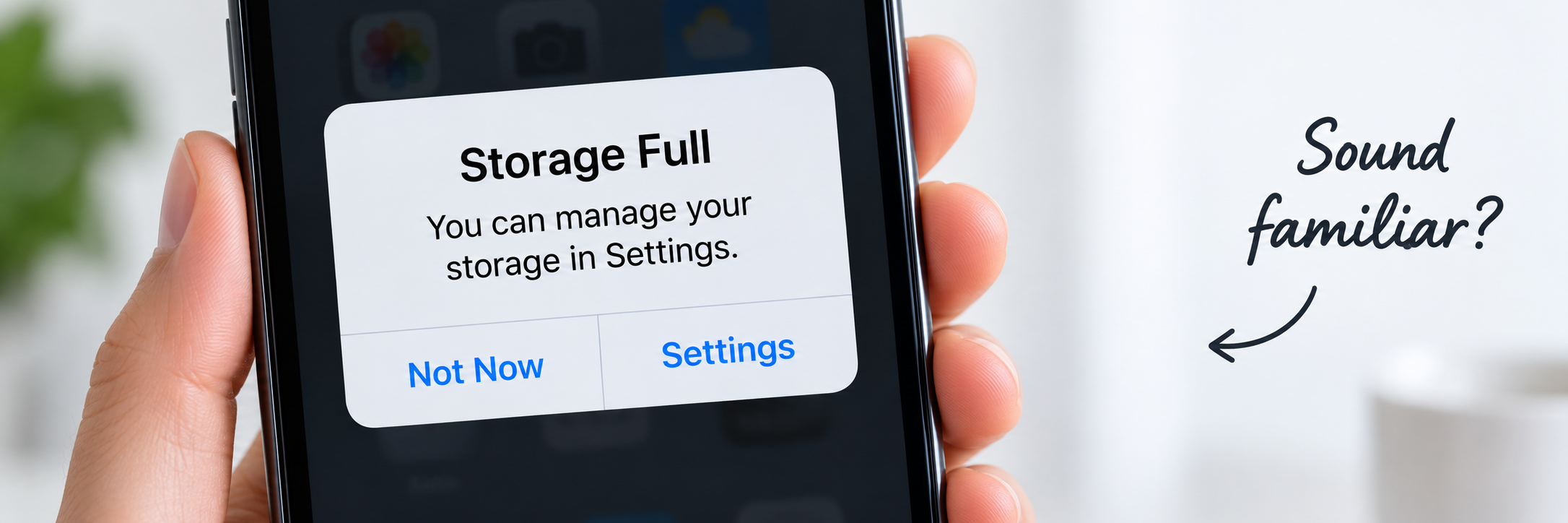
“Storage Full” Has Become an Everyday Problem
Modern phones and laptops collect files almost continuously. Photos become videos, messaging apps save attachments, downloads accumulate and work folders grow over time.
Eventually, users face the same choice: delete older files, pay for additional cloud space, upgrade the device, or move selected files somewhere else.
A portable external drive offers a simple alternative. Files can live outside the main device while remaining available when the drive is physically nearby.
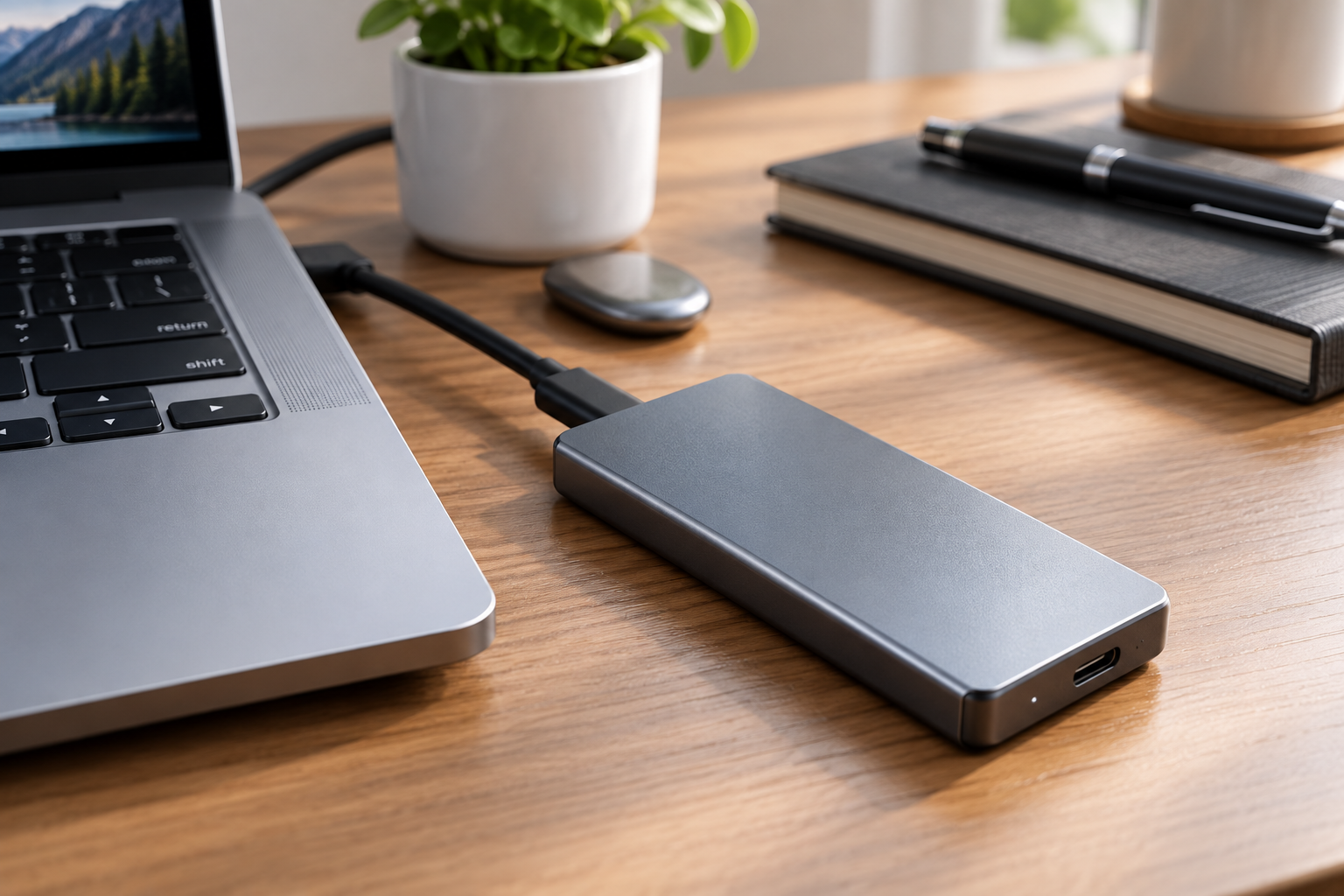
Compact Enough to Stay Close Without Taking Over Your Desk
Portability is one of the clearest advantages of this category. A small external drive can sit beside a laptop, fit into a work bag or stay inside a travel organizer without requiring a dedicated desktop setup.
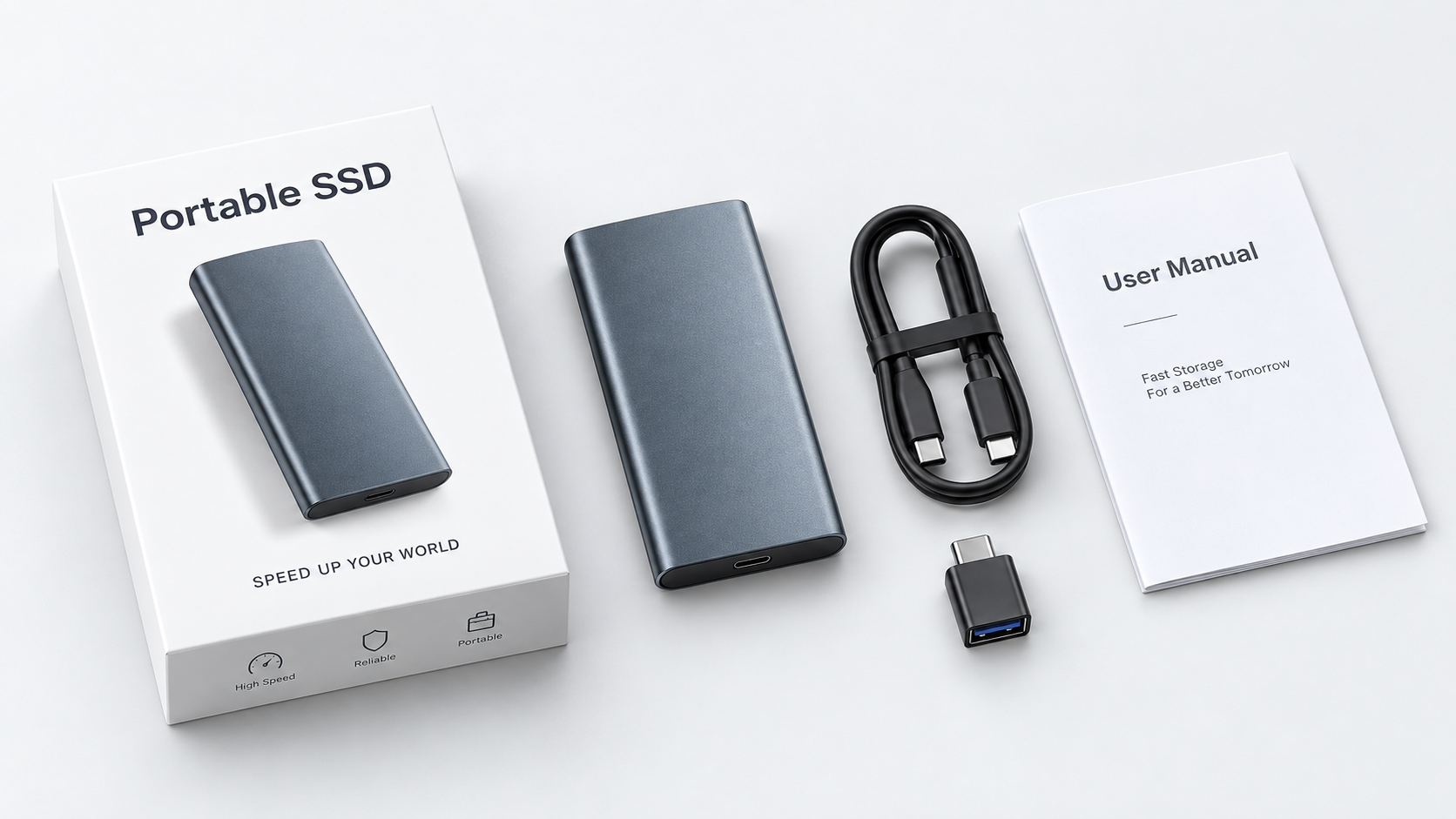
What We Would Check First
Package contents can vary by version, so confirm the exact listing before ordering.
The Useful Questions Start After You Plug It In
Storage products are often marketed through capacity and speed claims, but those figures are only part of the experience. Everyday usability also depends on compatibility, portability and how naturally the product fits into a normal routine.
How straightforward is connecting, opening and organizing files?
Which devices, connectors and file-system requirements need to be checked?
Is the drive compact enough to keep nearby during normal daily use?
Does physical storage actually simplify a normal file-management routine?
Everyday Experience Matters More Than One Headline Number
Actual transfer performance depends on the specific drive, host device, connection, cable, file system and type of files. For that reason, everyday usability is often more meaningful than quoting a single universal transfer number.
Everyday File Handling
Documents and photo libraries are generally easier to organize than large video archives, while larger files place more demands on connected hardware.
Everyday Practicality
The more meaningful benefit is having another physical place for selected files. Older photos can move off a phone, project folders can remain separate from internal laptop storage, and travel media can stay together in one compact location.
Portable SSD, Cloud Storage or USB Drive?
No storage method is ideal for every situation. The useful question is which combination of portability, offline access, large-file handling and recurring cost best matches the way you actually manage files.
Balanced Physical Storage
Convenient Remote Access
Maximum Pocket Convenience
The Main Difference Is Not Simply “Which One Is Better?”
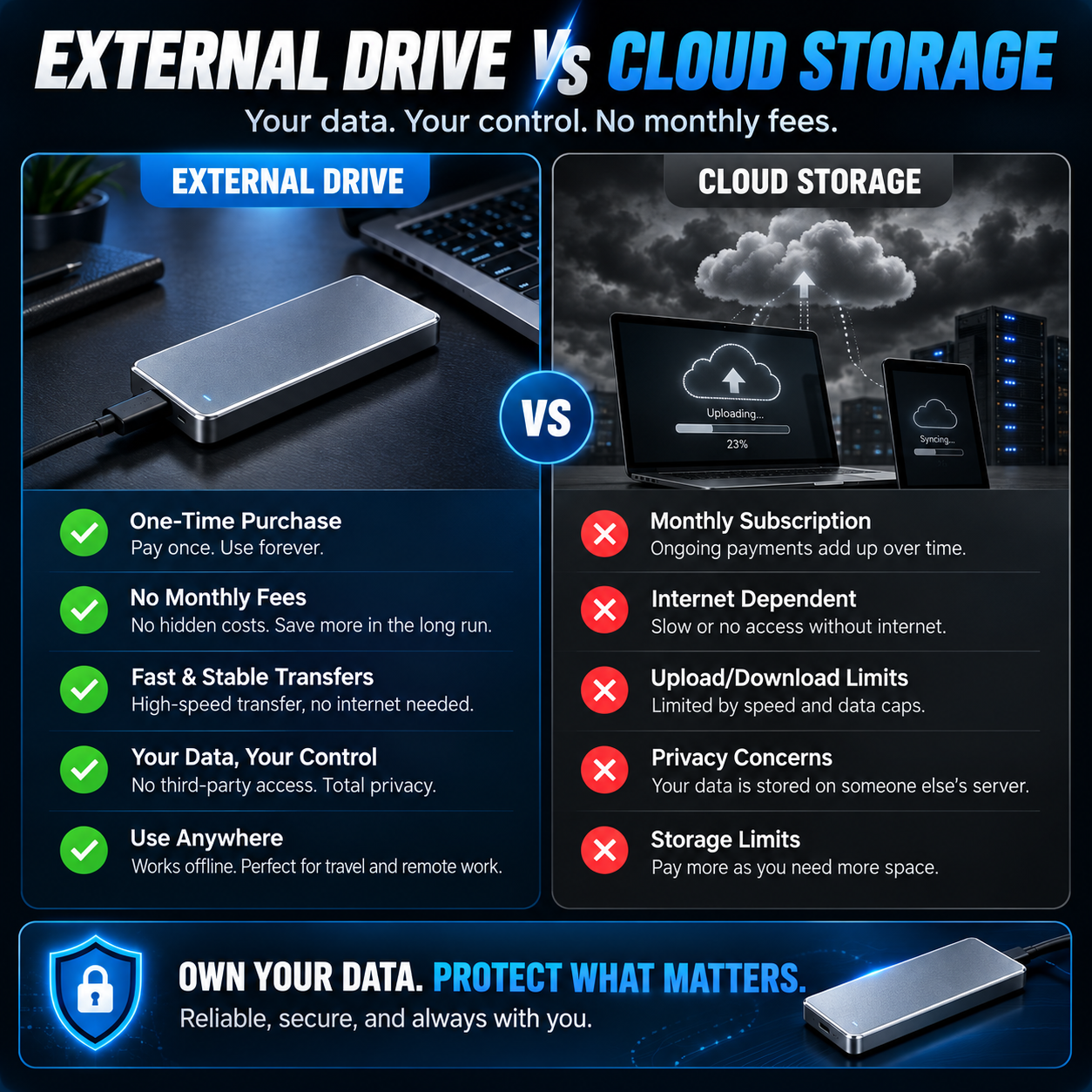
Portable SSDs, cloud services and USB drives solve different storage problems. Cloud storage is particularly useful when remote synchronization and access across devices matter. USB drives excel when maximum physical portability and simple file transfer are the priority.
A portable SSD sits between those approaches. Its main advantage is the combination of local physical access, compact size and suitability for larger collections of photos, videos and project files.
For users whose priority is keeping selected files physically nearby without depending entirely on an internet connection, a portable SSD can be a practical part of the overall storage setup. For irreplaceable files, however, one physical drive should not be the only backup.
A Closer Look at the Trade-Offs
Portable SSDs, USB drives, cloud services and external hard drives all solve slightly different problems. Looking at them side by side makes those differences much easier to understand.
| Feature | Portable SSD | USB Drive | Cloud Storage | External HDD |
|---|---|---|---|---|
| Physical Portability | Very Good | Excellent | Not Applicable | Moderate |
| Offline Access | Yes | Yes | Limited | Yes |
| Recurring Subscription | No | No | Often | No |
| Large File Use | Good | Model Dependent | Plan & Internet Dependent | Good |
| Travel Convenience | Good | Excellent | Internet Dependent | Lower |
| Physical File Control | High | High | Provider Based | High |
Where Portable Storage Makes Sense — and What Deserves a Closer Look
Storage devices deserve more scrutiny than ordinary accessories. Capacity, compatibility and reliability matter because the device is holding files you may want to keep.
What We Like
- Compact format is easier to carry than a traditional desktop drive.
- Useful for selected photos, videos, documents and project folders.
- Local storage itself does not require a recurring cloud subscription.
- Offline access can be helpful while traveling or working without reliable internet.
- Can complement cloud storage rather than replacing it completely.
What We Would Verify
- Confirm the usable capacity of the exact model selected.
- Real transfer performance depends on hardware, interface, cable and file type.
- Connector compatibility can differ across phones, tablets and computers.
- Important files should never exist on only one physical drive.
- Very inexpensive high-capacity versions deserve careful verification.
Best for People Who Regularly Create, Carry or Archive Files
External storage is not necessary for everyone, but it can become genuinely useful for people who frequently run into storage limits or move files between different locations.
For selected family photos, videos and older memories that no longer need to occupy a phone.
For documents, photos and media that may need to stay available without reliable internet.
For presentations, project folders, research files and work documents.
For selected image and video projects that quickly consume internal device storage.
The Questions Buyers Should Ask Before Trusting a Drive With Their Files
Rather than filling the page with invented testimonials, these are the practical questions that matter when evaluating portable storage.
“Will I Actually Carry It?”
Size and cable management matter because portable storage is most useful when the drive is actually nearby when you need it.
“Will It Work With My Devices?”
Connector type, operating-system support, file format and device permissions can affect compatibility.
“Am I Getting the Storage I Expect?”
Storage products should be evaluated by verified usable capacity, not simply the number shown on a listing.
More Space.
Less File Clutter.
The basic appeal of portable external storage is straightforward: selected files can live somewhere other than the internal storage of the devices you use every day.
For photos, videos, documents and project folders, a compact physical drive can be easier to keep nearby than a traditional external hard drive and less dependent on an internet connection than cloud-only storage.
It should not become the only copy of irreplaceable files, and buyers should verify capacity, compatibility and performance for the exact model they purchase.
Used as one part of a broader backup routine, however, portable storage can be a practical way to keep everyday files organized and accessible.